Wednesday
Room 1
11:40 - 12:40
(UTC+02)
Talk (60 min)
Part 1: Introducing Carbon's Memory Safety Model
The Carbon programming language is designed as a successor to C++. One of our primary motivations in recent years has been to enable the smooth introduction of memory safety into existing, large-scale C++ codebases and systems. In general, new languages must have a path to memory safety, as memory unsafe languages are increasingly an unsustainable risk for the industry. However, when we announced Carbon we did not have a concrete memory safety design in mind, and a major concern was whether we could add one later once the core language had already been designed, and whether we could provide a significantly more smooth and incremental path to adopting memory safety when starting from existing modern C++ than current languages provide.
Over the last year and a half, we have worked to build a concrete memory safety design to address these concerns. The result is a memory safety model that is capable of expressing common C++ code patterns, supports C++ interop, and allows the transition to memory safety to be performed incrementally in existing codebases. This talk introduces the model and mechanisms used to detect and prevent use-after-free and cross-thread data races at compile time, without requiring exclusivity for mutable pointers or splitting apart C++ data structures. The safety model also integrates with all of the Carbon features used to support migrating C++ code such as inheritance, function overloading, and specialization. We'll also cover Carbon's permissive mode, a stepping stone on the way to strict mode, that allows migrating to Carbon separately from adding the safety annotations needed for strict checking of memory safety.
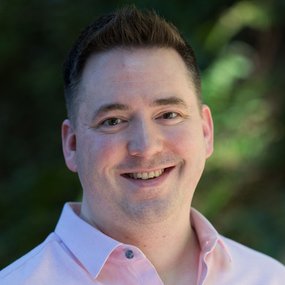
Chandler Carruth
Chandler Carruth is the technical lead for Google’s programming languages and software foundations. He has worked extensively on the C++ programming language and the Clang and LLVM compiler infrastructure. Previously, he worked on several pieces of Google’s distributed build system and made guest appearances helping maintain a few core C++ libraries across Google’s codebase. He received his M.S. and B.S. in Computer Science from Wake Forest University, but disavows all knowledge of the contents of his Master’s thesis. When not hammering away on a weirdly shaped keyboard, he enjoys sushi, fine dining, brown spirits, and everything about wine.